Foam Concrete
A lightweight, pumpable and highly versatile construction material for modern floors, roofs, geotechnical solutions and structural applications. It combines thermal insulation, strength and fast installation in a single solution.
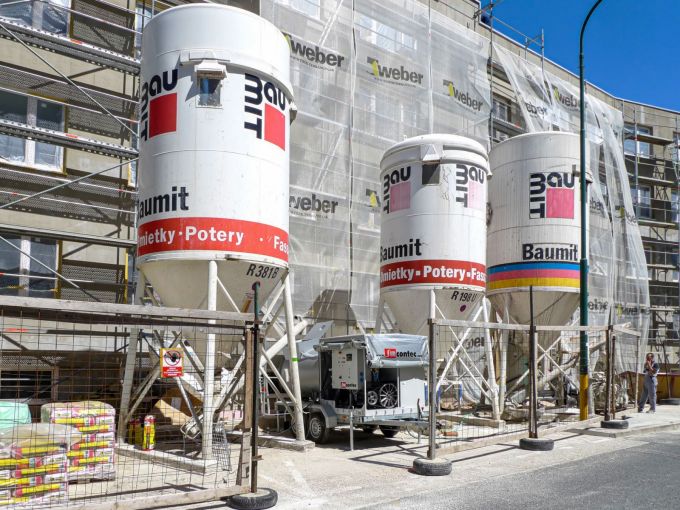
PBG Foam Concrete
PBG is foam concrete produced using SIRCONTEC technology. Thanks to precise production control, controlled technical‑foam generation, and accurate mix dosing, the material can be designed with the required density, strength, and performance for specific construction applications. It is manufactured either in a batching plant or directly on site using automated equipment that ensures reliable and repeatable production and installation.
Key Advantages of PBG Foam Concrete
- Easy application even in areas with limited access
- Self‑levelling and self‑compacting material
- Cohesive, homogeneous structure after hardening
- Excellent thermal insulation, sound insulation and sound‑absorption properties
- High resistance to fire, chemicals, frost and flooding
- High ability to absorb kinetic energy (impacts, vibrations)
- Zero lateral pressure on adjacent walls and structures
- High strength at low self‑weight
- Cost‑effective compared to traditional construction methods
What is Foam Concrete?
Foam concrete is a cement‑based composite in which coarse aggregate and part or all of the sand fraction are replaced by small, closed air bubbles generated by technical foam. These pores reduce bulk density and improve the material’s insulation performance.

It is an insulating construction material in which the air pores are uniformly distributed throughout the cement matrix. The number of pores and the proportion of air in the concrete significantly influence its density, strength and thermal‑insulation properties.
Principles of Production and Application of PBG Foam Concrete
Composition of Foam Concrete
Foam concrete is a mixture of cement, water, technical foam and, depending on the required properties, fine additives or sand. The foam creates stable air pores that define the density and significantly influence the material's final performance.
Processing and Application
Fresh foam concrete is fluid, easily pumpable over long distances and suitable for areas with limited access. After hardening, it forms a homogeneous and dimensionally stable structure without lateral pressure on adjacent elements.
Foam Concrete Properties in Fresh and Hardened State
This section distinguishes between fresh‑state properties, which affect processing and placement, and hardened‑state properties, which determine the final technical performance of the structure.
Fresh‑State Parameters of Foam Concrete
- Fluidity and self‑compaction
- Foam stability
- Consistency determined by the water‑cement ratio and foam content
- Foam concrete must not be vibrated
Hardened‑State Parameters of Foam Concrete
- Density (bulk weight) as the primary design parameter
- Compressive strength according to density
- Thermal conductivity
- Acoustic insulation and vibration damping
- Fire resistance
- Long‑term stability and durability
- Resistance to water, frost, chemicals and flooding
PBG Foam Concrete is a Versatile Construction Material
- Density from 200 to 1600 kg/m³ depending on project requirements
- Optimal balance of thermal insulation and strength
- High fire resistance and durability
- Easy pumping and application
- Economically efficient solution for a wide range of structures
Implemented Structures
In practice, PBG Foam Concrete is designed according to the requirements of the specific structure: sometimes low weight and thermal insulation are decisive, other times pumpability, substrate levelling, cavity filling or load‑bearing capacity. Therefore, the design always considers the intended use, required density, strength, transport method and placement conditions.
Structures made from SIRCONTEC foam concretes may be infill or structural, levelling or sloped, horizontal or vertical, prefabricated or cast on site, and geotechnical. Most applications fall within these typical density ranges:
|
Application Type |
Typical Density |
|
Floors and roofs |
250–700 kg/m³ |
|
Geotechnical applications |
400–500 kg/m³ |
|
Prefabricated elements |
600–1200 kg/m³ |
|
Non‑structural infills |
200–500 kg/m³ |
|
Cast‑in‑place building structures |
1200–1600 kg/m³ |
Structures built using SIRCONTEC foam concrete are described in more detail in the corresponding sections of Building Structures.
Density, Strength and Thermal Conductivity of Foam Concrete
The density, strength and thermal conductivity of foam concrete depend on the chosen mix design, which can be tailored using SIRCONTEC technology to meet the requirements of a specific application. The mix composition influences the final strength, thermal conductivity, pumpability and installation characteristics of the foam concrete. For geotechnical and filling applications, the mix design is usually relatively simple, whereas for structural applications or pumping to greater heights, it becomes a critical factor.
To increase strength and crack resistance, lightweight granular materials such as expanded clay aggregate (LECA) or polystyrene beads are sometimes incorporated into the foam concrete matrix.
Fly ash, fibres and stone dust may be added to the mix to reduce costs and/or adjust compressive and flexural strength.
There is no single “best” foam concrete mix design. The final composition also depends on locally available materials, batching techniques, foam generation methods, and placement/installation procedures.
Flexural and Tensile Strength
The flexural strength of foam concrete typically reaches approximately 20 to 35% of its compressive strength.
Flexural and tensile strength can be improved through appropriate mix design modifications, such as adding polypropylene fibres or lightweight aggregates, or by incorporating suitable mesh reinforcement into the foam concrete. In some applications, the reinforcement is advantageously combined with a separation geotextile.
Properties of PBG 20–55 (no sand)

- Binder: CEM II 32.5R or higher-grade cements. Filler: technical foam.
- Strength of PBG depends mainly on density, but also on component characteristics and ratios, and curing conditions.
- The lower limit of 28‑day compressive strength represents the minimum declared strength value when CEM II 32.5R is used.
- Highest strengths have been repeatedly achieved under optimal material and laboratory or site conditions.
- Maximum λ value refers to dry‑state thermal conductivity.
- Wet‑density tolerance: ±25 kg/m³ for PBG 20–55.
- PBG 35, 40, 45 and 50 are certified construction materials under Technical Assessment TSÚS SK TP‑14/0118.
Properties of PBG 30–160 (with sand)

- Binder: CEM II 32.5R or higher-grade cements. Filler: sand and technical foam.
- The lower limit of 28‑day compressive strength represents the minimum declared strength value when CEM II 32.5R is used. Higher required strengths must be consulted in advance.
- Highest strengths have been repeatedly achieved under optimal material and laboratory or site conditions.
- The wet density tolerance (fresh-state density) is ±25 kg/m³ for PBG 20–55 and ±50 kg/m³ for PBG 60–160.
- PBG 35, 40, 45 and 50 are certified construction materials under Technical Assessment TSÚS SK TP‑14/0118.
Flexural and Tensile Strength
The ratio of flexural strength to compressive strength typically ranges from 0.20 to 0.35. Flexural and tensile strength can be increased by adjusting the mix design, e.g., adding polypropylene fibres, lightweight aggregates, or incorporating suitable mesh reinforcement, sometimes combined with a separation geotextile.
PBG Foam Concrete vs Traditional Materials
PBG Foam Concrete combines properties that traditional materials usually offer only separately. It is lightweight and thermally insulating yet forms a strong and stable structure. Compared to common fills, gravel, or insulation materials, it enables faster installation, lower structural loads, and provides high resistance to moisture, frost, and fire. The result is more efficient construction solutions with lower installation and operating costs.

- Legend: ✓✓ = significant advantage, ✓ = advantage, ○ = depends on material/application, ✗ = disadvantage or limited property.
- Note: Comparison of selected properties of PBG Foam Concrete with commonly used construction materials. Specific parameters may vary depending on application type and structural design.
More information on the topic
- Additional documents, technical sheets and presentations are available in the Documents section.
- Images, photos and videos can be found below on this page or in the Gallery section.